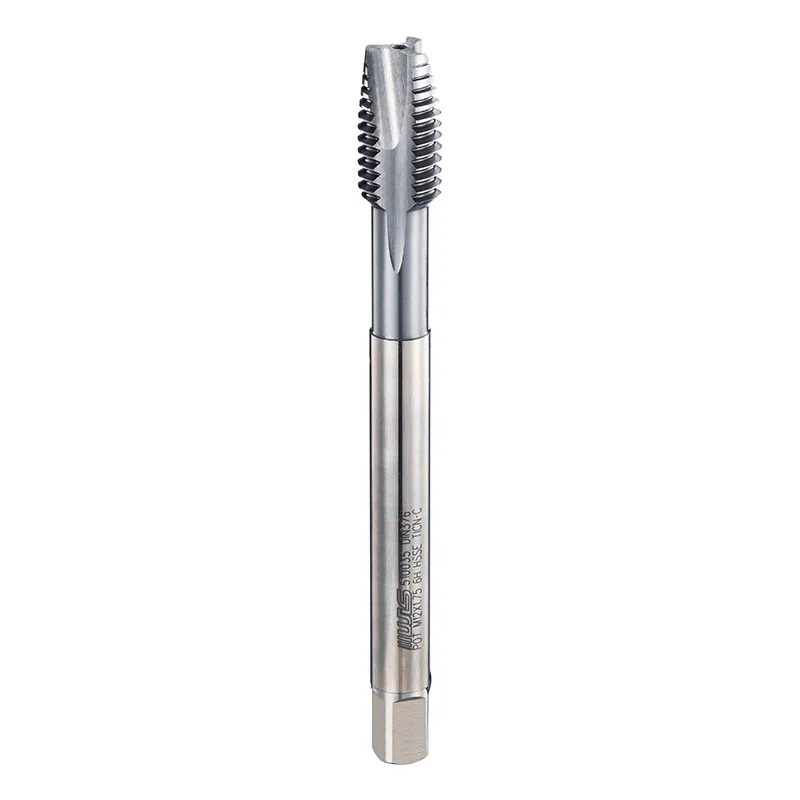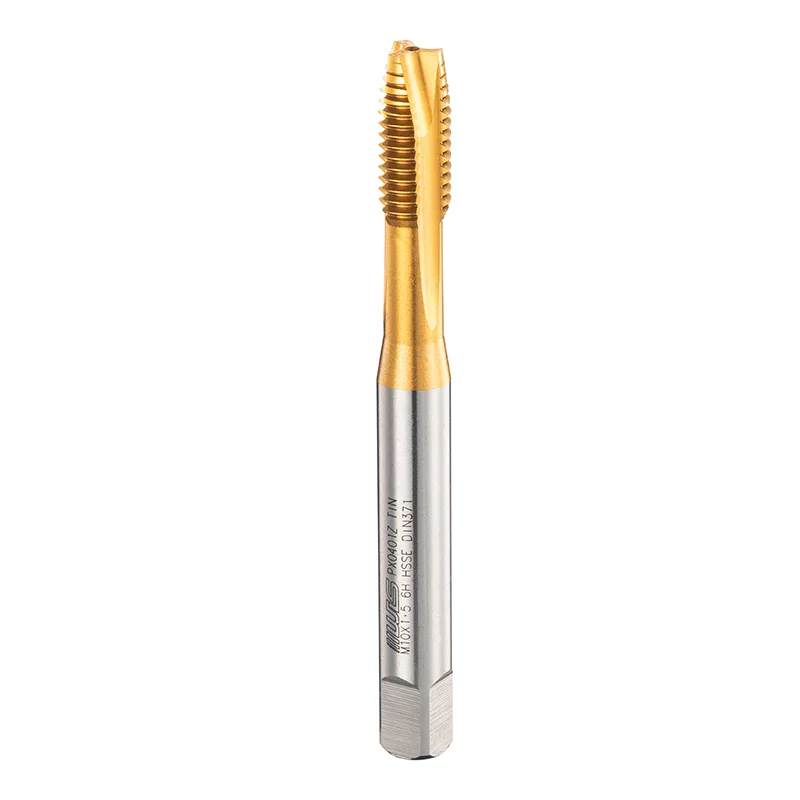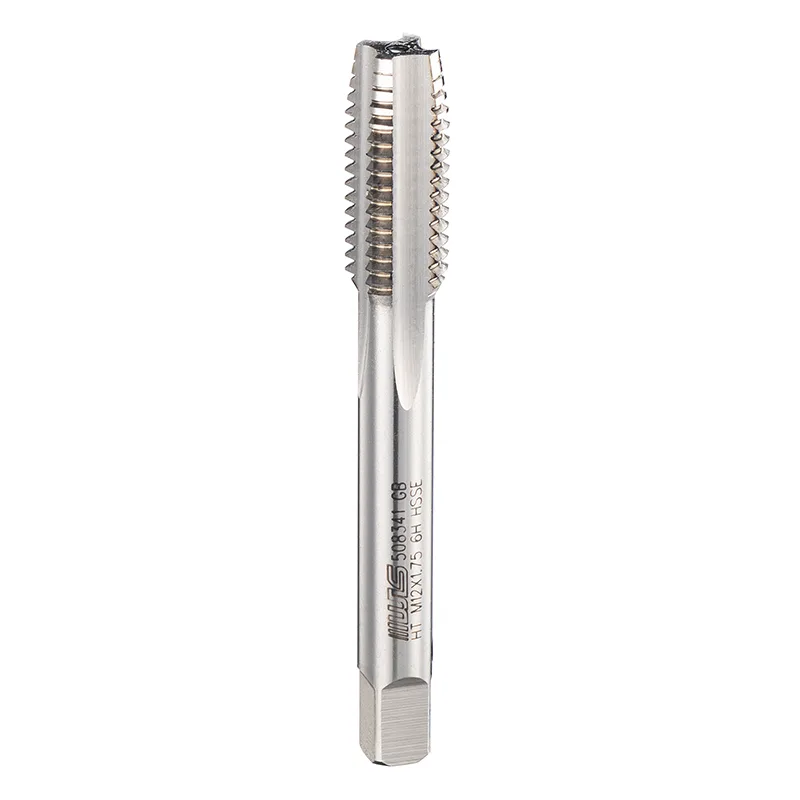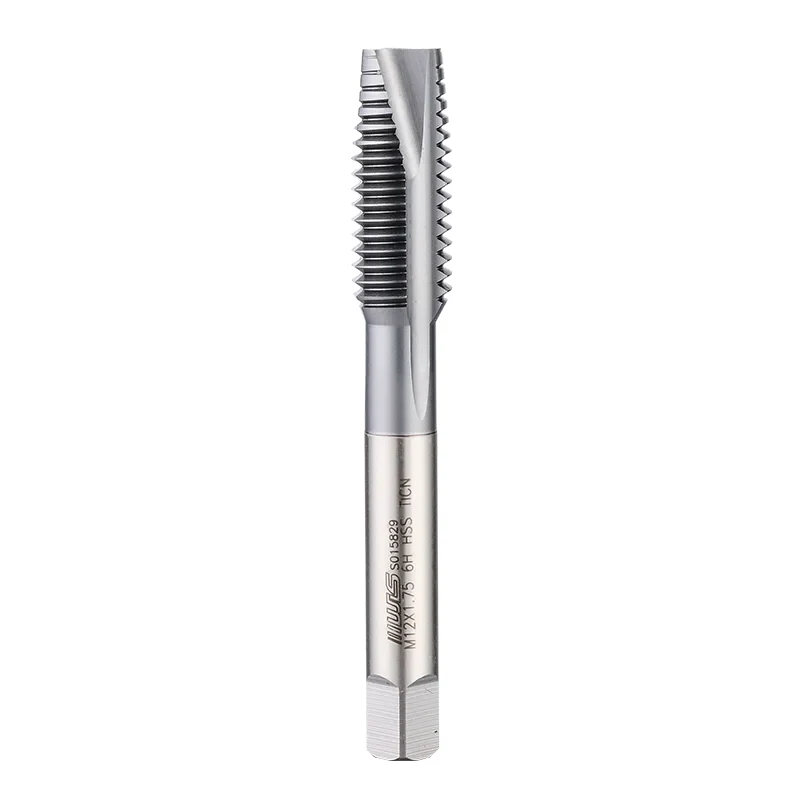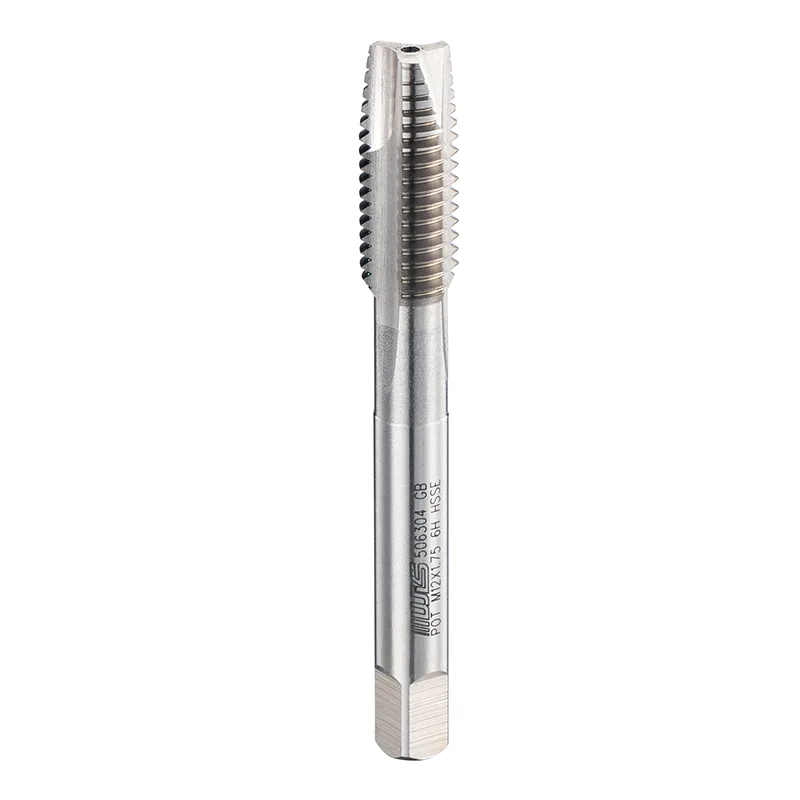
What Makes DIN Spiral Flute Taps With No Coating a Practical Choice for Precision Threading?
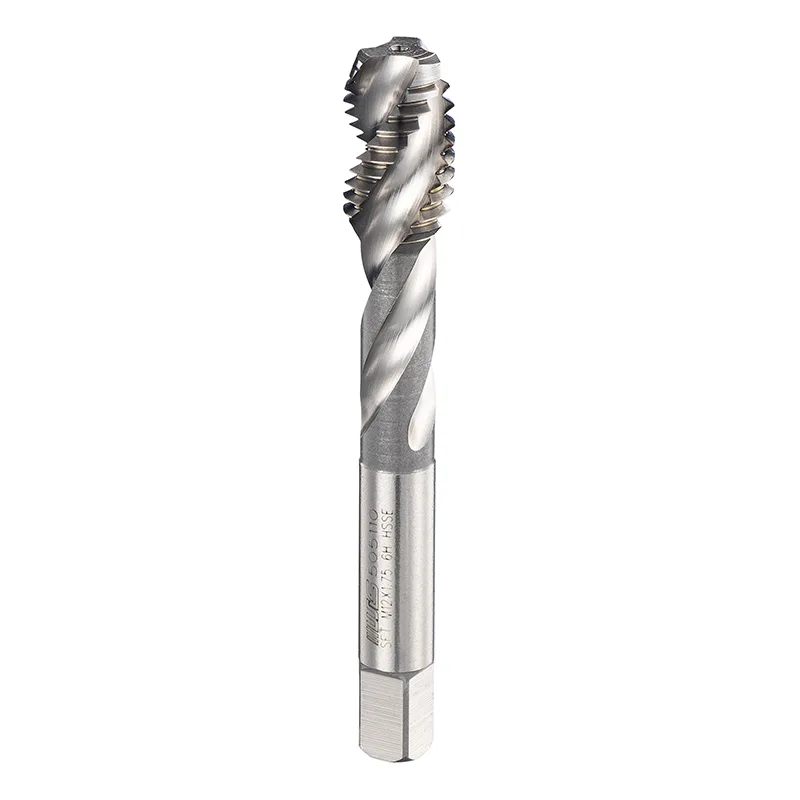
DIN Spiral Flute Taps With No Coating are designed for controlled internal threading where chip evacuation, dimensional consistency, and reliable machining are important. Their helical flute geometry is particularly useful for blind holes because chips can be guided upward and away from the cutting area. An uncoated surface can also be a practical solution when the workpiece material, cutting conditions, and production volume do not require a specialized coating. This guide explains how these taps work, where they perform best, how to select the correct specification, and how to avoid common problems such as tap breakage, poor thread quality, excessive torque, and incorrect hole preparation.
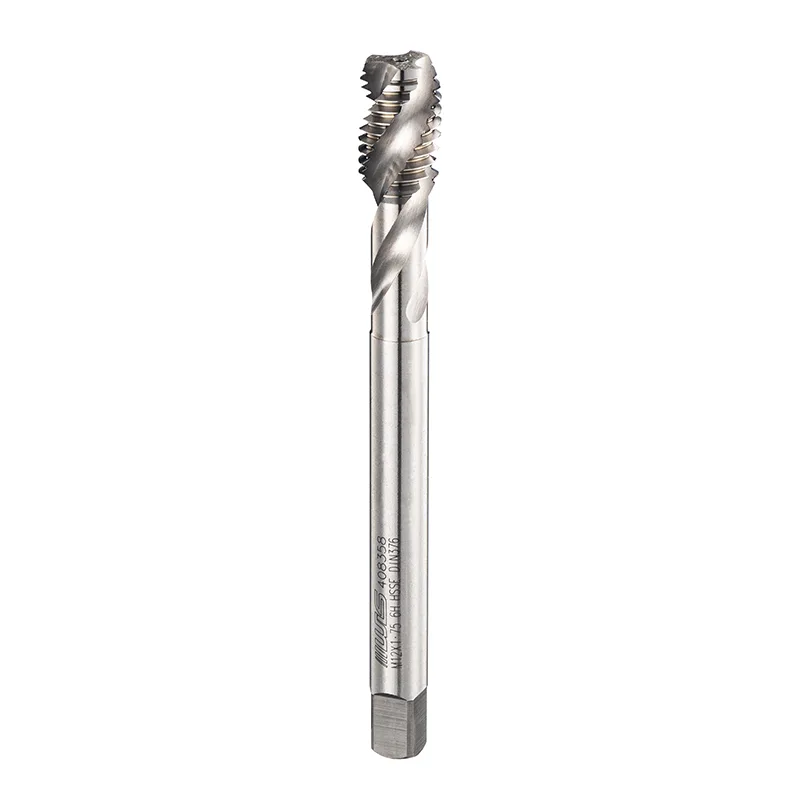
Table of Contents
- Understanding DIN Spiral Flute Taps With No Coating
- How Spiral Flute Geometry Works
- Why Choose an Uncoated Surface?
- Key Advantages in Production
- Material Compatibility
- Selection Guide
- Important Machining Parameters
- Uncoated vs. Coated Taps
- Common Problems and Solutions
- Typical Applications
- Quality and Manufacturing Considerations
- Frequently Asked Questions
- Conclusion
Understanding DIN Spiral Flute Taps With No Coating
Internal threading may appear simple, but the tapping stage can become one of the most sensitive operations in precision machining. The situation becomes more demanding when the hole is blind. Unlike a through hole, a blind hole has a closed bottom, so the cutting process must manage chips without allowing them to accumulate in the working area.
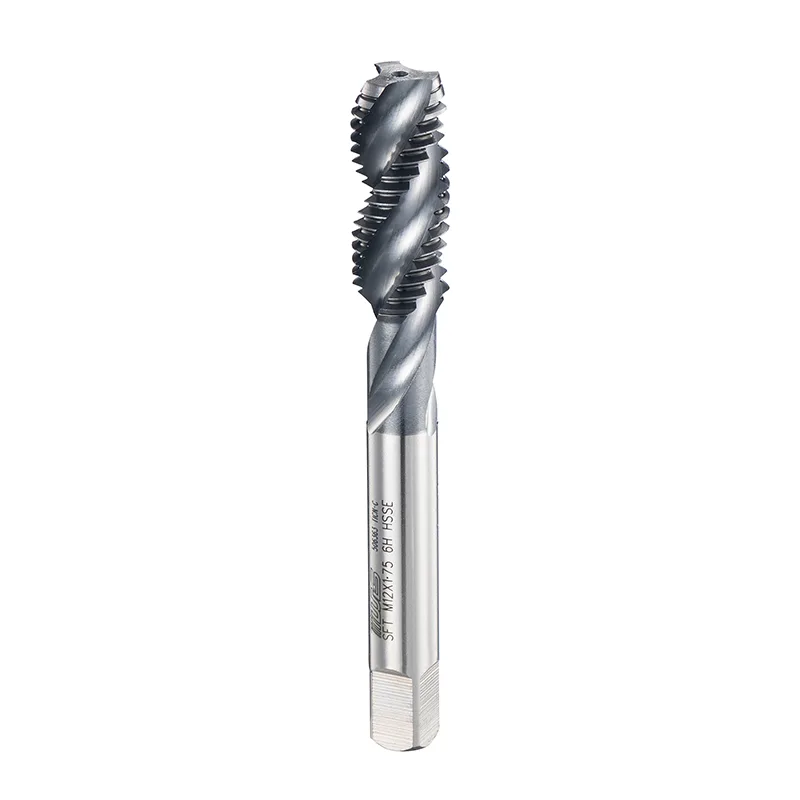
DIN Spiral Flute Taps With No Coating combine standardized dimensions with a helical flute design and a bright, untreated cutting surface. Commercial examples of uncoated DIN spiral flute machine taps are available in HSS-E construction, with DIN 371 or DIN 376 configurations depending on size and shank dimensions. Typical specifications can include a 60-degree thread profile, defined tolerance classes, and application depths specified relative to tap diameter. :contentReference[oaicite:1]{index=1}
The most important point is that "no coating" does not mean "low performance." An uncoated tap can be highly effective when its geometry, base material, cutting conditions, coolant, and workpiece material are correctly matched.
Practical takeaway: The right tap is determined by the complete machining application, not simply by whether the tool has a coating.
How Spiral Flute Geometry Works
The defining feature of a spiral flute tap is its helical cutting groove. During right-hand tapping, the geometry helps move chips upward toward the entrance of a blind hole instead of allowing them to collect at the bottom.
This makes spiral flute taps particularly useful for blind-hole applications and for materials that tend to generate continuous or stringy chips. Technical references describe spiral flute taps as tools intended to move swarf away from the cutting teeth and out of the hole. :contentReference[oaicite:2]{index=2}
Effective chip evacuation matters because packed chips can increase cutting torque. Once the available flute space becomes restricted, the tap may experience higher resistance, thread damage, dimensional problems, or even catastrophic breakage.
1. Cutting
Cutting edges generate the internal thread profile.
2. Chip Control
Helical flutes guide chips away from the bottom of the hole.
3. Thread Formation
The tap progressively forms the required internal thread.
Why Choose an Uncoated Surface?
Coatings can improve wear resistance and reduce friction in demanding applications, but they are not automatically required for every tapping operation. Uncoated taps remain widely used because they provide a straightforward cutting surface and can be economical for suitable materials and production conditions. Technical tooling references commonly identify uncoated taps as "bright finish" tools. :contentReference[oaicite:3]{index=3}
For manufacturers processing aluminum alloys, copper-based materials, lower-strength steels, and other suitable workpieces, an uncoated tap may provide a balanced combination of cutting performance and purchasing cost. The absence of a coating also avoids introducing a coating-selection issue when the base tool material and workpiece combination already provide satisfactory results.
- Cost efficiency: A simpler surface treatment can reduce tool acquisition cost.
- Direct cutting surface: The cutting edge is used without an additional coating layer.
- Suitable for selected materials: Particularly useful where extreme abrasion resistance is not the main requirement.
- Easy application planning: Tool selection can focus on geometry, material, tolerance, and cutting conditions.
- Flexible production use: Appropriate for maintenance, general machining, prototypes, and many production operations.
However, uncoated does not mean universally suitable. For abrasive materials, very high production volumes, difficult alloys, or elevated cutting temperatures, a coated solution may offer longer usable life. The best choice should therefore be based on actual machining conditions rather than the coating status alone.
Key Advantages in Production
When properly selected, DIN spiral flute taps without coating can address several common problems faced by machining teams.
| Production Challenge | How the Tool Can Help |
|---|---|
| Chip accumulation in blind holes | Helical flutes guide chips toward the hole entrance. |
| Frequent tap breakage | Better chip evacuation can reduce chip-related overload. |
| Thread surface damage | Reduced chip recutting helps maintain cleaner thread surfaces. |
| Tool purchasing cost | Uncoated construction can be economical for suitable jobs. |
Spiral flute geometry is especially valuable in blind-hole threading because chip evacuation is one of the main differences between spiral and straight flute designs. :contentReference[oaicite:4]{index=4}
Material Compatibility
Selecting the tap without considering the workpiece is a common source of inconsistent results. The same DIN spiral flute tap may behave very differently in aluminum, mild steel, stainless steel, or a high-strength alloy.
| Material Type | Main Consideration | Uncoated Suitability |
|---|---|---|
| Low-carbon steel | Chip formation and lubrication | Often suitable |
| Aluminum alloys | Built-up edge and chip adhesion | Can be suitable with proper lubrication |
| Copper alloys | Material ductility and chip behavior | Application dependent |
| Stainless steel | Work hardening, heat, and lubrication | Requires careful selection |
| Hardened or abrasive alloys | Wear resistance and thermal load | Often consider specialized tooling |
Manufacturer application data for uncoated spiral flute taps commonly distinguishes performance according to workpiece hardness and material group, reinforcing the importance of selecting cutting conditions for the actual material rather than relying on a universal speed. :contentReference[oaicite:5]{index=5}
Selection Guide for Buyers and Machinists
Choosing the correct DIN Spiral Flute Taps With No Coating requires more than confirming the nominal thread size. Before placing an order, evaluate the following specifications:
- Thread standard: Confirm whether the application requires metric, fine metric, or another thread system.
- Nominal diameter: Match the tap diameter to the required internal thread.
- Pitch: Confirm the exact pitch rather than assuming a coarse thread.
- Tolerance: Select the required internal thread tolerance, such as 6H where applicable.
- Tap length: Ensure the working length is adequate for the required thread depth.
- Shank design: Confirm the shank and square dimensions are compatible with the holder.
- Flute geometry: Consider the material's chip characteristics and hole depth.
- Tool material: HSS-E is a common choice for demanding general-purpose machine tapping applications.
- Hole preparation: Use the correct pilot-hole diameter and maintain suitable hole quality.
- Machine conditions: Consider spindle control, alignment, coolant delivery, and reversing accuracy.
Buyer tip: Do not purchase a tap based only on “DIN,” “HSS,” or “spiral flute.” The complete specification determines whether the tool is appropriate for your actual application.
Important Machining Parameters
Even a high-quality tap can produce poor results when the machining conditions are incorrect. Hole diameter, tapping speed, spindle synchronization, lubrication, alignment, and thread depth all influence performance.
Cutting speed should not be treated as a universal number. It depends on tool material, workpiece grade, tap diameter, machine rigidity, coolant, thread depth, and production requirements. For example, published technical data for an uncoated HSS-E DIN spiral flute tap specifies blind-hole applications and a defined maximum tapping depth relative to tool diameter, demonstrating why manufacturers should consult the specific tool data sheet rather than apply one speed or depth to every size. :contentReference[oaicite:6]{index=6}
A Practical Process Checklist
- Verify the drilled hole diameter before tapping.
- Remove burrs at the hole entrance.
- Maintain accurate spindle-to-hole alignment.
- Use adequate cutting fluid for the workpiece material.
- Keep the tapping cycle synchronized.
- Allow sufficient clearance at the bottom of a blind hole.
- Monitor torque and unusual vibration.
- Inspect the first threaded component before continuous production.
Uncoated vs. Coated Spiral Flute Taps
The decision between an uncoated and coated tap should be based on the machining environment. Neither option is automatically superior for every job.
| Factor | Uncoated Spiral Flute Tap | Coated Spiral Flute Tap |
|---|---|---|
| Initial cost | Generally economical | Generally higher |
| Surface treatment | Bright / untreated | Additional coating layer |
| General machining | Strong practical option | Useful when additional wear resistance is needed |
| High-wear applications | Application dependent | Can provide advantages |
The key is to balance tool cost against actual tool life, cycle time, material difficulty, and thread quality. A more expensive tool is not necessarily more economical if the production environment does not benefit from its additional properties.
Common Problems and Practical Solutions
| Problem | Possible Cause | Recommended Check |
|---|---|---|
| Tap breaks inside hole | Chip packing, excessive torque, poor alignment | Check pilot hole, lubrication, depth, and tapping cycle |
| Rough thread | Poor chip evacuation or worn cutting edges | Inspect flute condition and coolant supply |
| Oversized thread | Incorrect tap tolerance or unstable process | Verify tap specification and machine synchronization |
| Excessive heat | High speed, friction, inadequate lubrication | Optimize speed and cutting fluid |
| Short tool life | Material mismatch or excessive cutting load | Review material, tap geometry, and application data |
Typical Applications
DIN spiral flute taps are especially relevant to machining operations where controlled chip evacuation is important. Their geometry is widely associated with blind-hole threading, although the exact suitability depends on the workpiece and cutting conditions. :contentReference[oaicite:7]{index=7}
- Automotive component machining
- General mechanical parts
- Precision metal components
- Industrial equipment manufacturing
- Aluminum and non-ferrous component production
- Steel component machining
- Maintenance and repair operations
- Prototype and small-batch production
- Threaded holes in machine housings and assemblies
- Components requiring consistent internal thread quality
Quality and Manufacturing Considerations
For professional buyers, dimensional consistency is only one part of tap quality. The manufacturing process should also focus on flute geometry, cutting-edge condition, heat treatment, thread accuracy, surface finish, concentricity, and inspection procedures.
DIN specifications help define important dimensional and thread-related characteristics, but buyers should still request complete technical documentation for the exact tap model. Commercial DIN spiral flute taps demonstrate that specifications can include tool material, standard, thread size, pitch, cutting direction, tolerance, flute count, shank dimensions, and recommended blind-hole depth. :contentReference[oaicite:8]{index=8}
Taizhou Hongyi Precision Tools Co.,Ltd. focuses on precision cutting tools for professional machining applications. For buyers sourcing DIN spiral flute taps without coating, the supplier should be able to clarify thread size, pitch, tolerance, material, flute geometry, applicable workpieces, production requirements, and customization possibilities before recommending a tool.
A Smarter Purchasing Checklist
- Identify the workpiece material.
- Confirm thread diameter and pitch.
- Define blind-hole depth.
- Specify required thread tolerance.
- Confirm DIN standard and tap dimensions.
- Determine whether an uncoated surface is appropriate.
- Discuss cutting speed, coolant, and machine conditions.
- Request samples or technical recommendations for critical applications.
Frequently Asked Questions
Are DIN Spiral Flute Taps With No Coating suitable for blind holes?
Yes. Spiral flute geometry is particularly useful for blind holes because it helps move chips upward and away from the bottom of the hole. The exact maximum tapping depth depends on the tool design and manufacturer specifications. :contentReference[oaicite:9]{index=9}
Does an uncoated tap mean lower quality?
No. An uncoated tap can be a high-quality precision tool. Its performance depends on the base material, geometry, heat treatment, grinding accuracy, workpiece material, lubrication, and machining conditions.
What is the main advantage of a spiral flute tap?
The major advantage is controlled chip evacuation. The helical flute helps guide chips away from the cutting area, which is particularly valuable in blind-hole threading.
Are HSS-E spiral flute taps suitable for industrial machining?
HSS-E is widely used for machine taps and can provide a useful combination of hardness, toughness, and heat resistance. However, the correct grade should always be matched to the workpiece and cutting conditions.
How can tap breakage be reduced?
Start with the correct pilot-hole diameter, maintain accurate alignment, use suitable lubrication, avoid excessive tapping speed, provide enough blind-hole clearance, and select a flute geometry appropriate for the material's chip characteristics.
Should buyers always choose coated taps for longer tool life?
Not necessarily. Coatings can provide benefits in demanding applications, but the additional cost may not be justified for every material or production environment. The correct choice depends on wear, heat, cutting speed, production volume, and total machining cost.
Conclusion
DIN Spiral Flute Taps With No Coating can be an efficient solution for manufacturers seeking reliable internal threading without automatically adding the cost of a specialized surface coating. Their greatest practical strength is the combination of standardized tap dimensions and spiral flute geometry that supports chip evacuation, especially in blind-hole applications.
However, successful tapping depends on more than the tap itself. Workpiece material, thread size, pitch, tolerance, hole preparation, tapping depth, machine synchronization, cutting speed, lubrication, and tool condition must all work together. A properly selected uncoated tap can deliver clean threads and stable production, while an incorrectly matched tool can fail regardless of its surface treatment.
For manufacturers and distributors looking for reliable DIN threading solutions, Taizhou Hongyi Precision Tools Co.,Ltd. can provide professional support for product selection and application requirements. Whether you need standard sizes, specific thread tolerances, bulk supply, or application-oriented recommendations, choosing the correct tool specification is the first step toward more stable machining.
Looking for the Right DIN Spiral Flute Tap?
Need help matching tap size, pitch, tolerance, material, flute geometry, or production requirements? Contact Taizhou Hongyi Precision Tools Co.,Ltd. to discuss your machining application and find a suitable threading solution.
Contact us for professional tooling support and customized requirements.
Related News
- How Did One Machine Shop Reduce Threading Rejects by 60%—After Switching to DIN Straight Flute Taps for Their Blind Hole Operations?
- Why Are DIN Extended Spiral Point Taps Essential for High-Performance Threading?
- Why Are ISO Spiral Flute Taps With Coating Essential for High-Precision Threading?
- How Can ISO Extended Spiral Flute Taps Improve Precision Machining Performance?
- Why Are ISO Spiral Point Taps With No Coating Still a Preferred Choice for Precision Threading?
- Why JIS Spiral Flute Taps With Coating Deliver Superior Threading Performance in Modern Machining Applications?
Leave me a message