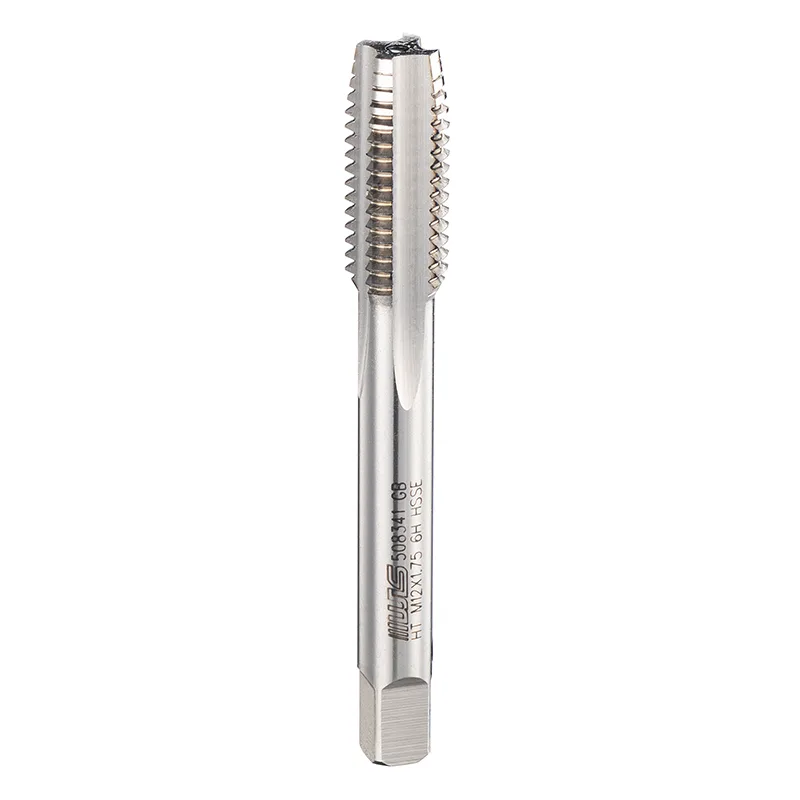
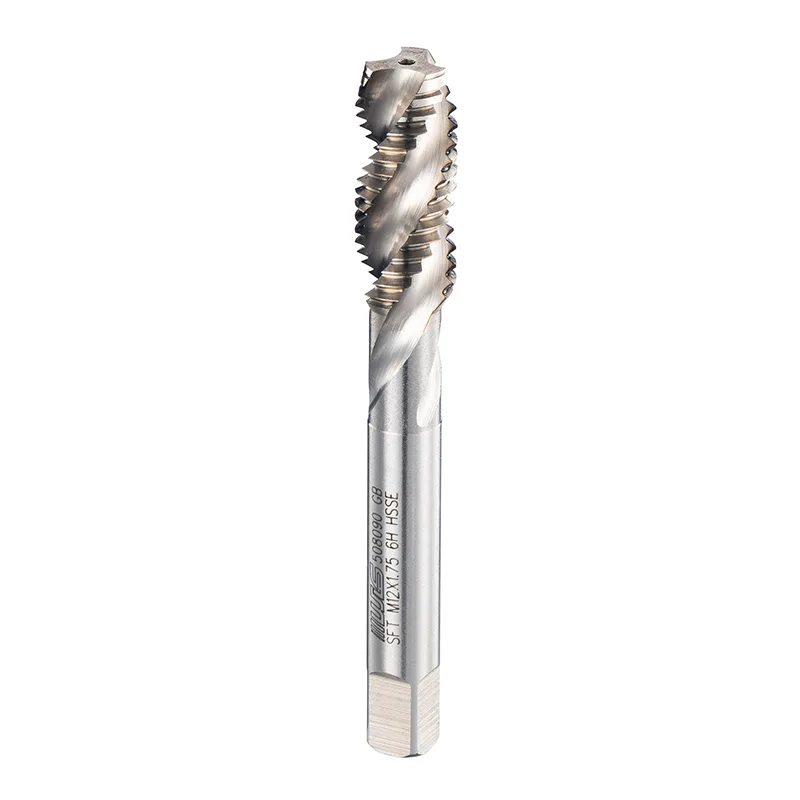
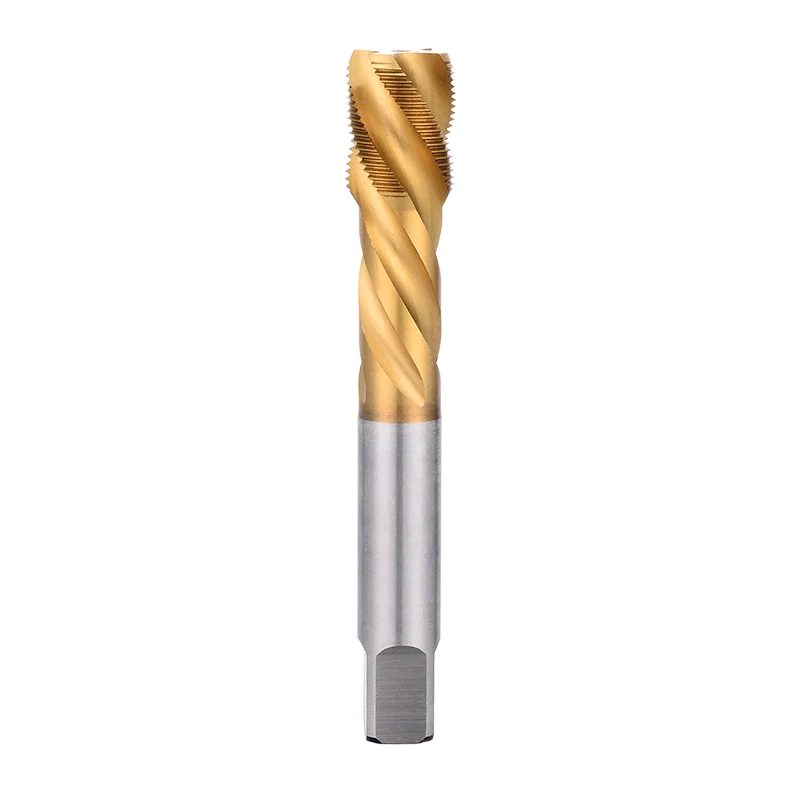
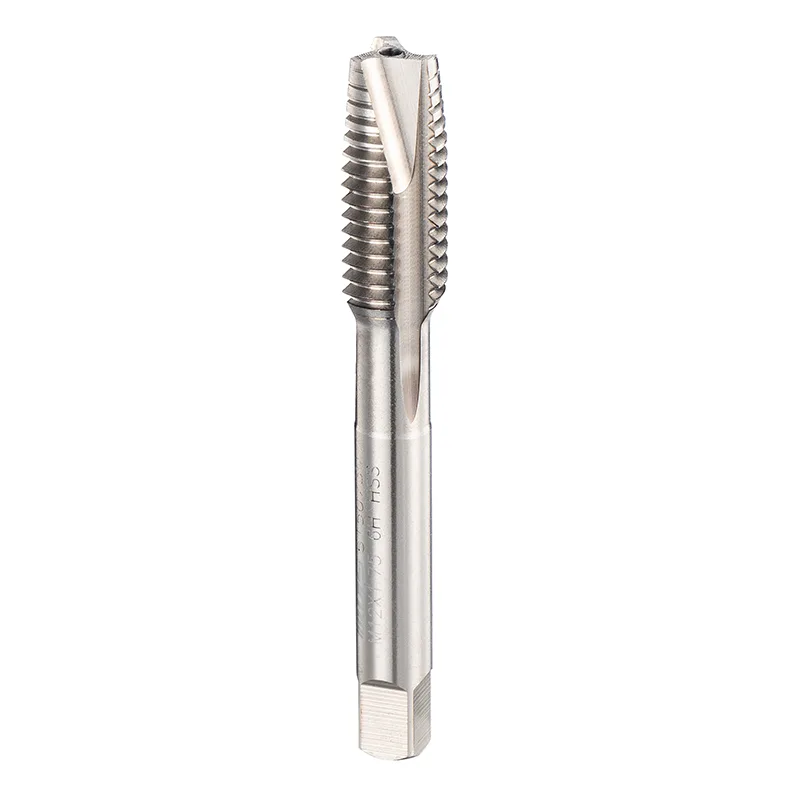
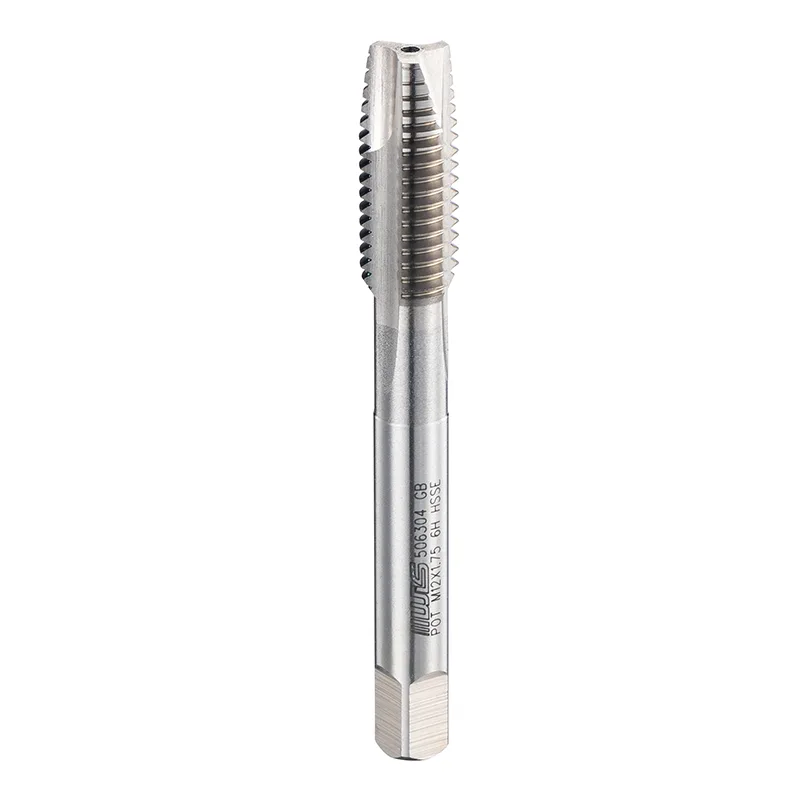
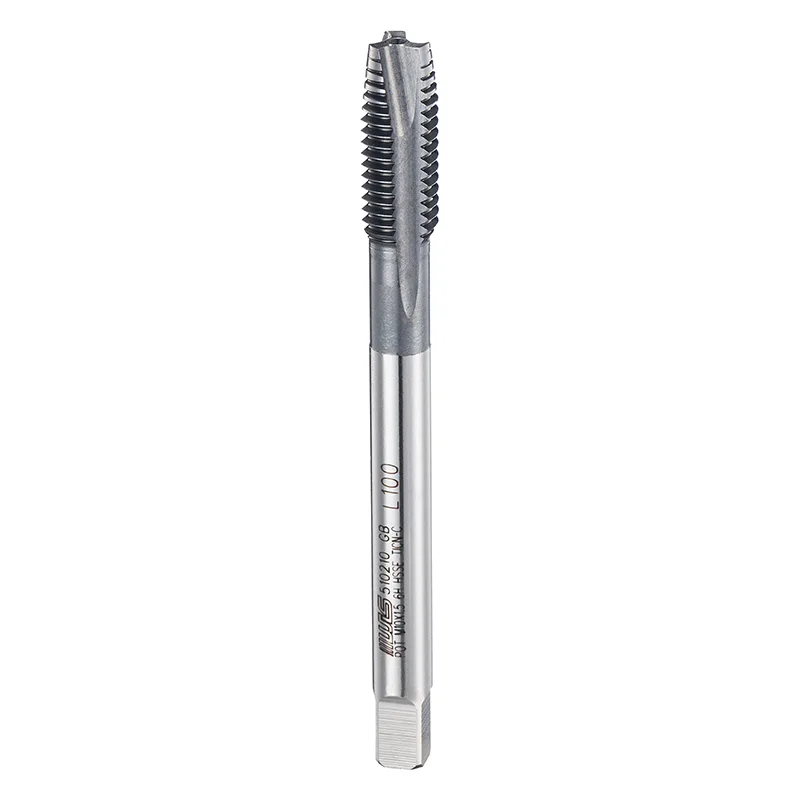
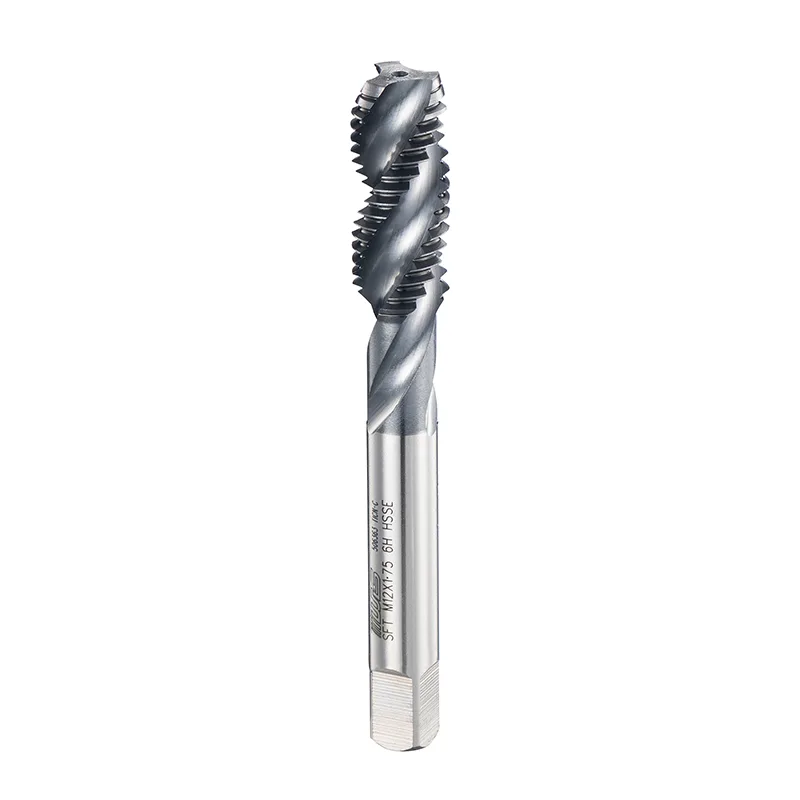
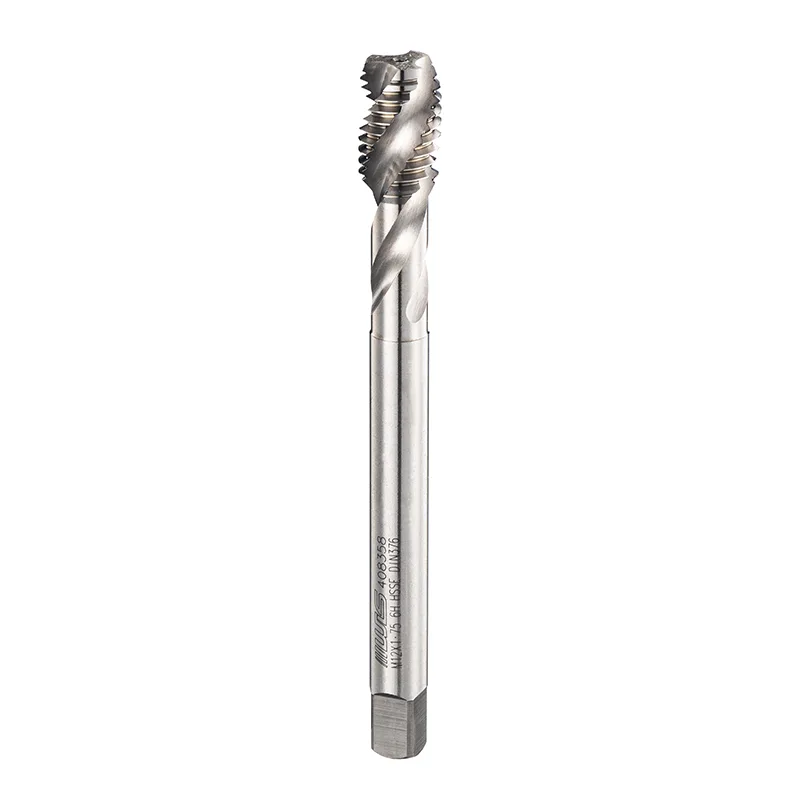
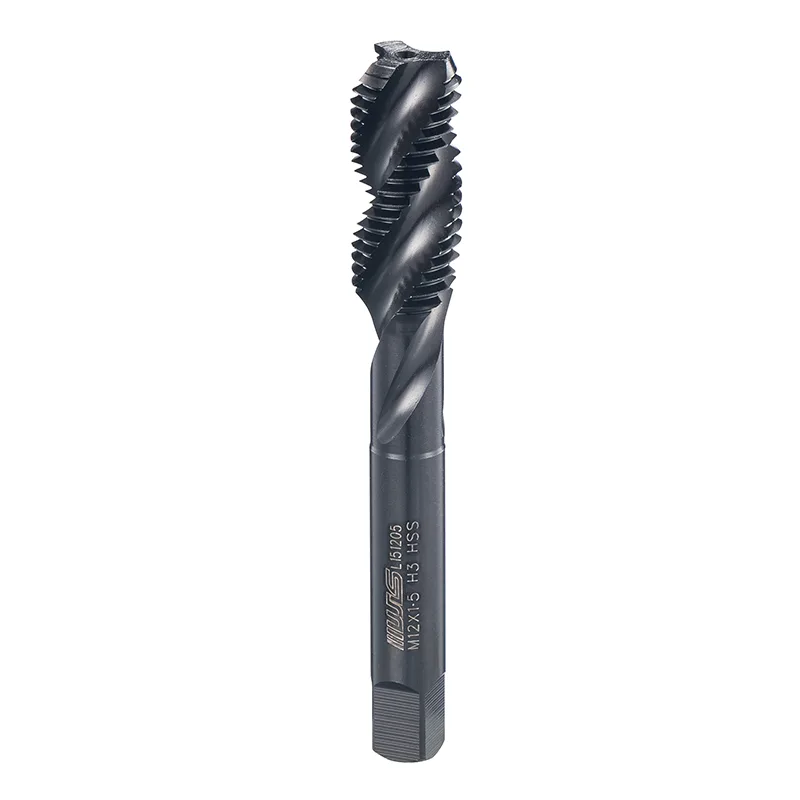
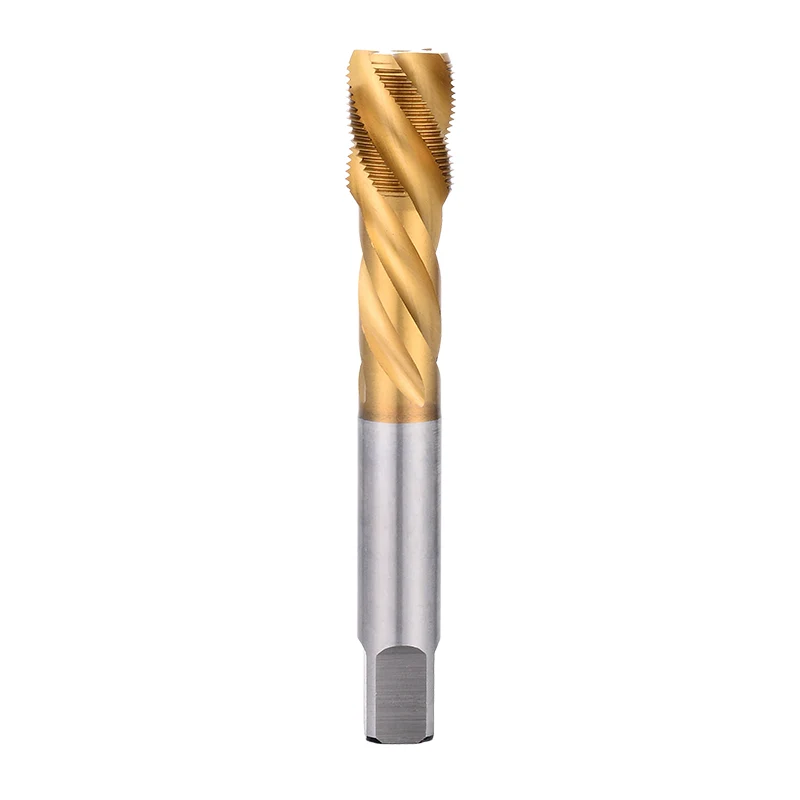
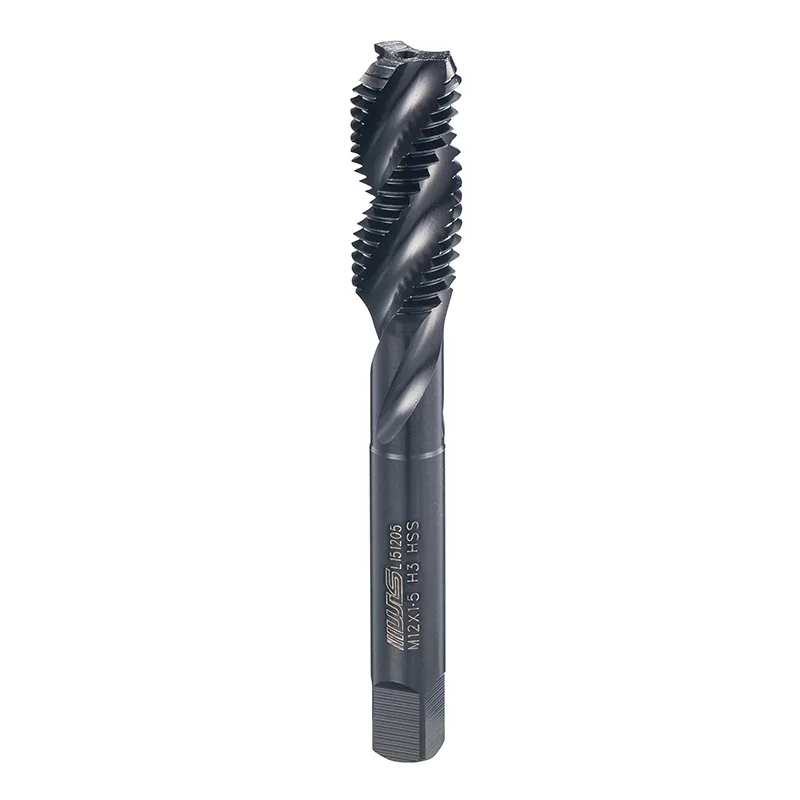
Taps are classified by their shapes into straight groove taps, helical groove taps, tapered taps and rolling taps, each with its own advantages in performance.
Straight flute taps are the most versatile, capable of processing both through and through holes, as well as non-ferrous and ferrous metals. They are also the cheapest. However, it is also not very targeted. It can do everything, but it is not the best at anything. The cutting cone part can have 2, 4 or 6 teeth. The short cone is used for through holes, and the long cone is used for through holes.
As long as the bottom hole is deep enough, a cutting cone with a longer length should be selected as much as possible. This way, more teeth can share the cutting load and the service life will be longer.
2. Helical groove taps are more suitable for processing threads without holes, and the chips are discharged backward during processing. Due to the helix Angle, the actual cutting rake Angle of the tap will increase as the helix Angle increases. Experience tells us that when processing ferrous metals, the helix Angle should be chosen to be smaller, generally around 30 degrees, to ensure the strength of the helical teeth.
When processing non-ferrous metals, a larger helix Angle can be selected, around 45 degrees, to make the cutting sharper.
3. When the tip tap is used to process threads, the chips are discharged forward. Its core size is designed to be relatively large, with good strength and the ability to withstand considerable cutting forces. It works very well on processing non-ferrous metals, stainless steel and ferrous metals. For through-hole threads, threaded taps should be given priority.
4. Extrusion taps are more suitable for processing non-ferrous metals. Different from the working principle of the aforementioned cutting taps, they extrude metals to shape and deform them, forming internal threads. The internal thread metal fibers formed by extrusion are continuous, with relatively high tensile and shear strength, and the surface roughness of the processed surface is also relatively good. However, the requirements for the bottom hole of the extrusion tap are relatively high: if it is too large, the amount of base metal will be small.
This results in an overly large diameter of the internal thread and insufficient strength. If it is too small, the metal under closed extrusion has nowhere to go, causing the tap to break. The calculation formula is: Bottom hole diameter = nominal diameter of internal thread -0.5 pitch.
We use cookies to offer you a better browsing experience, analyze site traffic and personalize content. By using this site, you agree to our use of cookies. Privacy Policy