Why Are DIN Spiral Flute Taps With Coating Essential for High-Precision Threading?
Threading quality directly impacts the strength, reliability, and lifespan of machined components. In modern manufacturing environments, tool performance is expected to remain stable under high speeds, difficult materials, and continuous production cycles. DIN Spiral Flute Taps With Coating have become a preferred solution for manufacturers seeking precision, efficiency, and durability. This article explores how coated spiral flute taps improve threading operations, reduce tool wear, and solve common machining problems across industries.
Article Summary
DIN Spiral Flute Taps With Coating are engineered for precision internal threading, especially in blind hole applications. Their spiral flute geometry efficiently evacuates chips upward while advanced coatings improve wear resistance, reduce friction, and extend service life. This article explains the structure, materials, coatings, advantages, applications, troubleshooting methods, maintenance tips, and selection strategies for achieving consistent threading quality. Manufacturers using these taps often experience better dimensional accuracy, improved productivity, and lower tooling costs.
Table of Contents
- 1. What Are DIN Spiral Flute Taps With Coating?
- 2. Why Are Coated Spiral Flute Taps Important?
- 3. How Does Spiral Flute Geometry Improve Threading?
- 4. Which Coatings Are Commonly Used?
- 5. What Materials Can Be Machined?
- 6. How Do Coated Taps Reduce Production Costs?
- 7. What Are the Main Industrial Applications?
- 8. How to Choose the Right DIN Spiral Flute Tap?
- 9. Common Threading Problems and Solutions
- 10. Maintenance and Storage Tips
- 11. Future Trends in Precision Threading Tools
- 12. FAQ
1. What Are DIN Spiral Flute Taps With Coating?
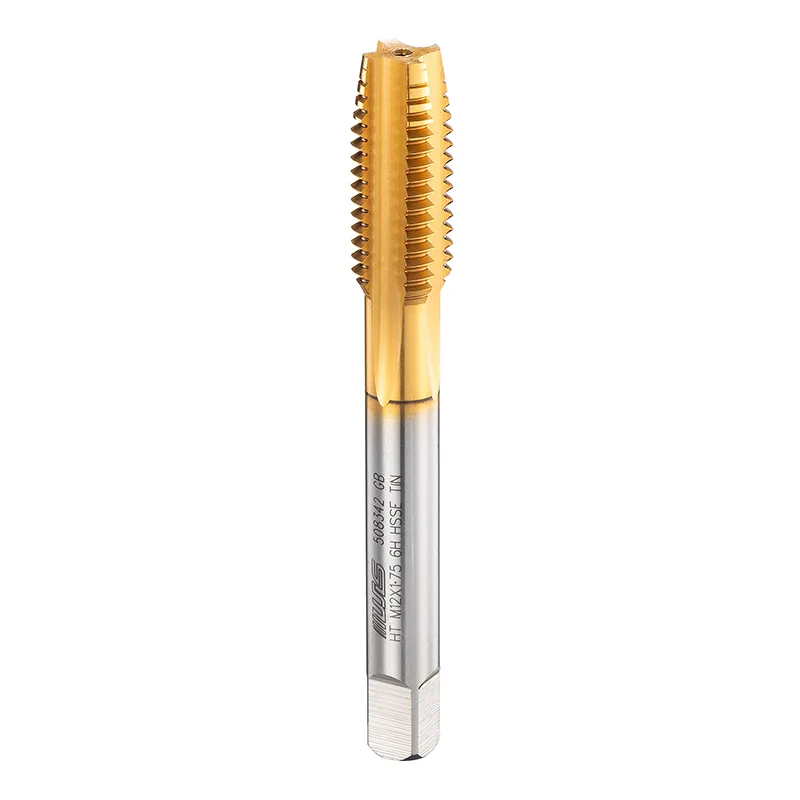
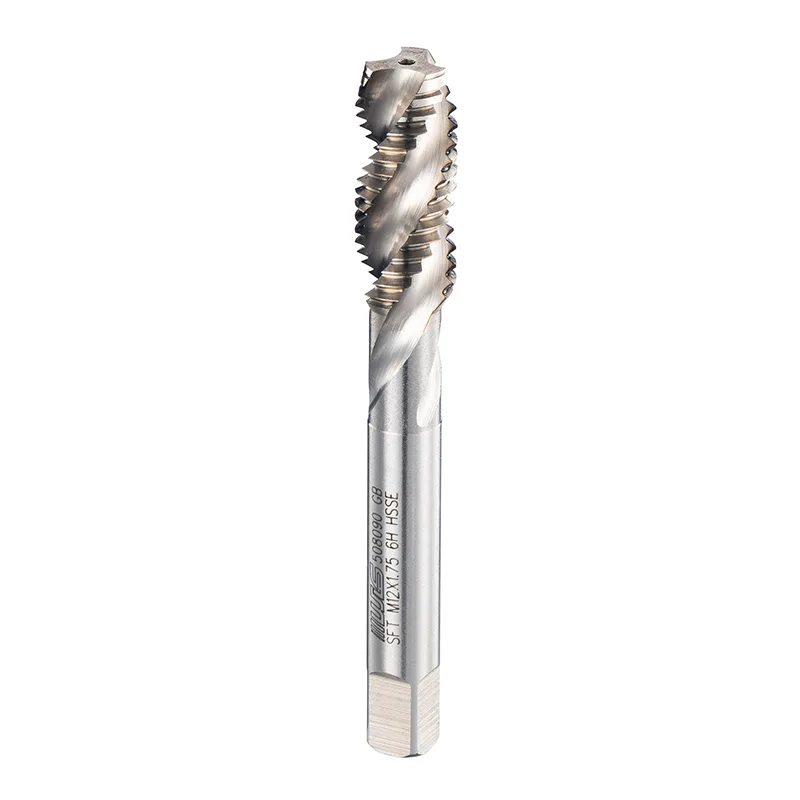
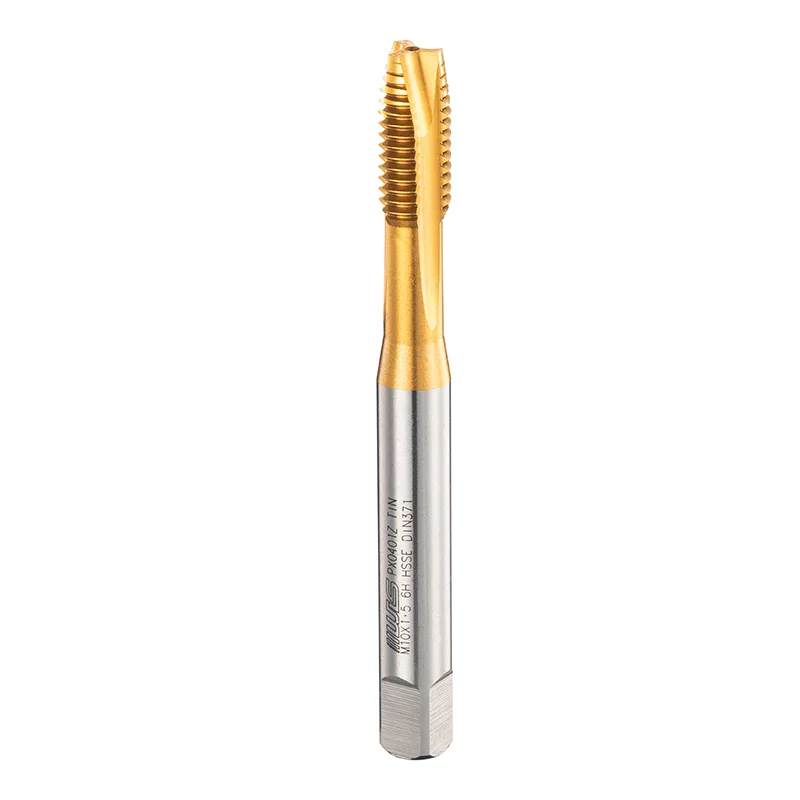
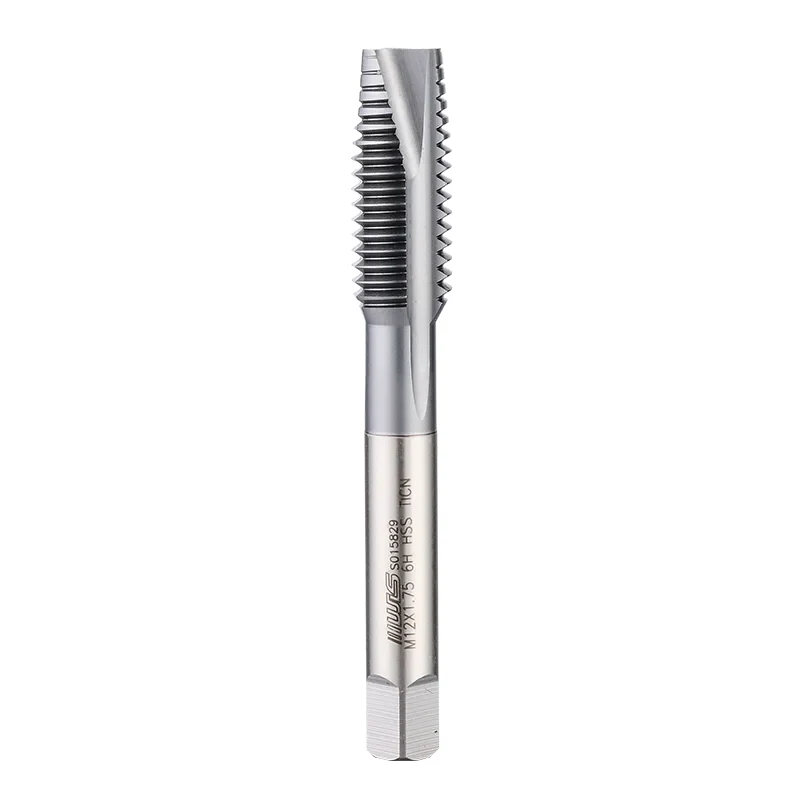
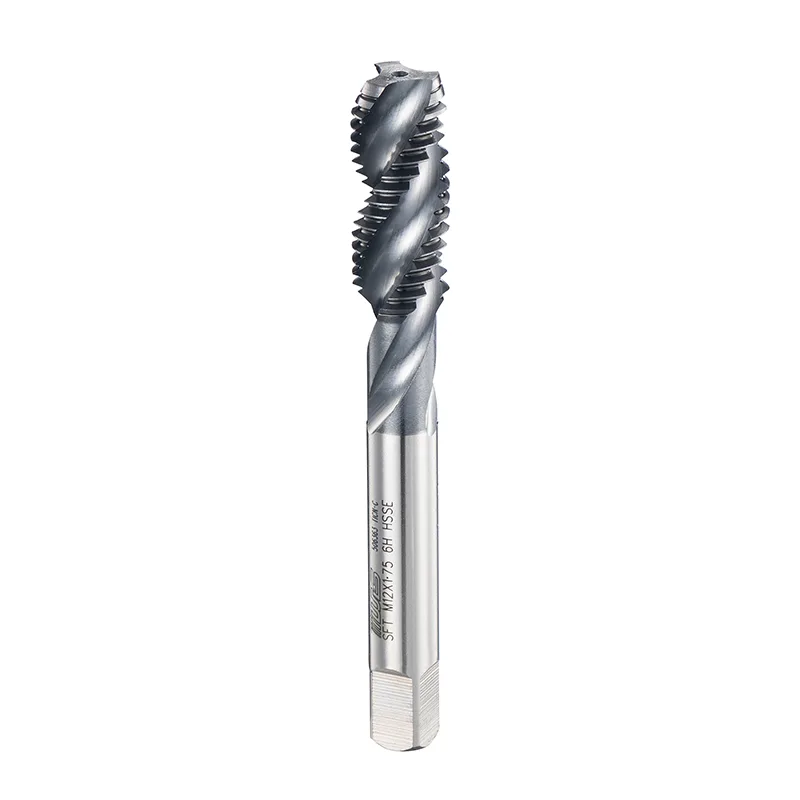
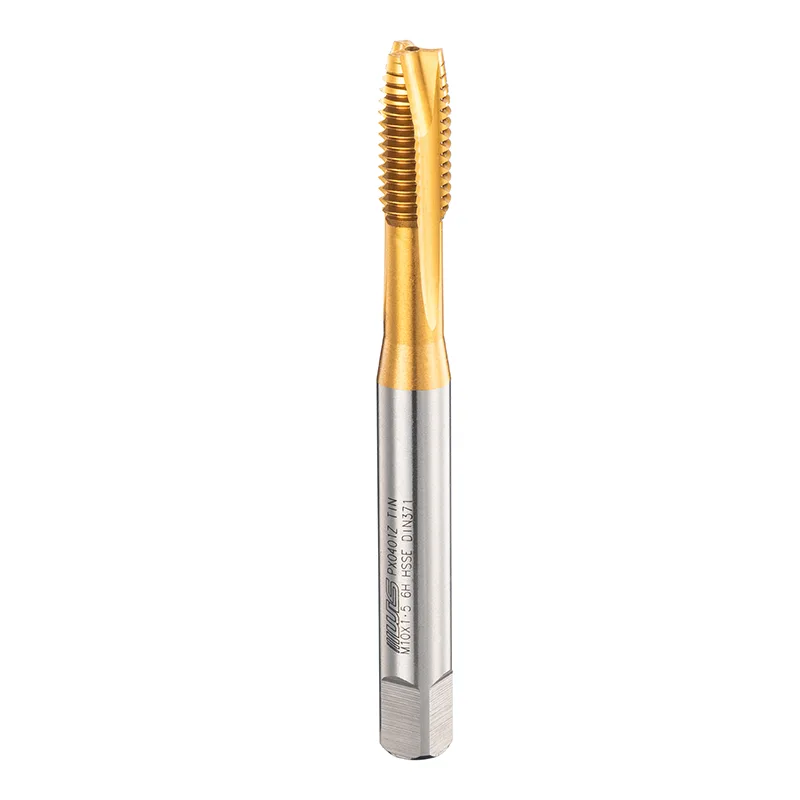
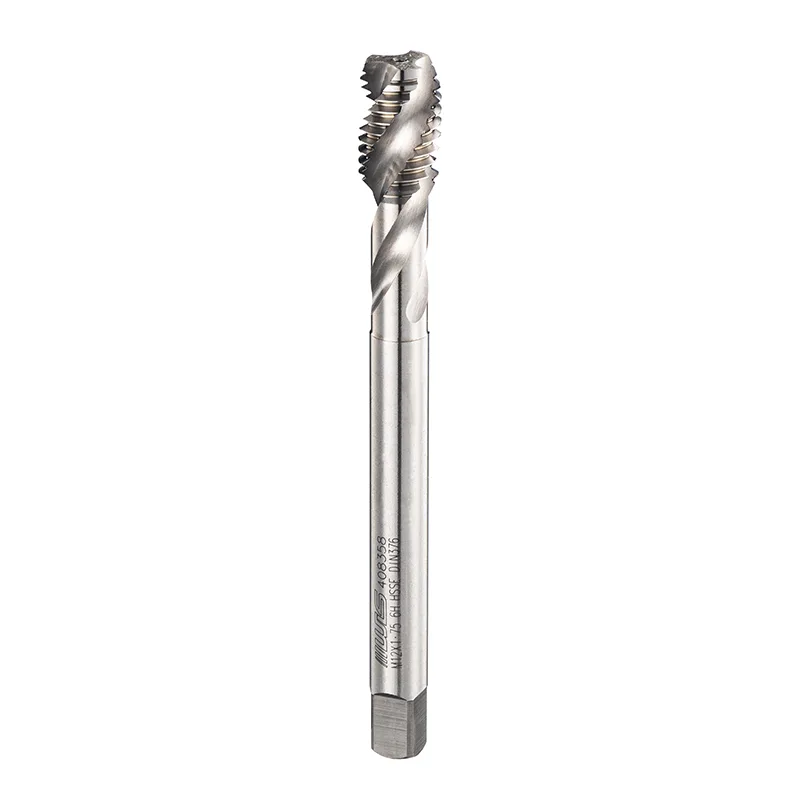
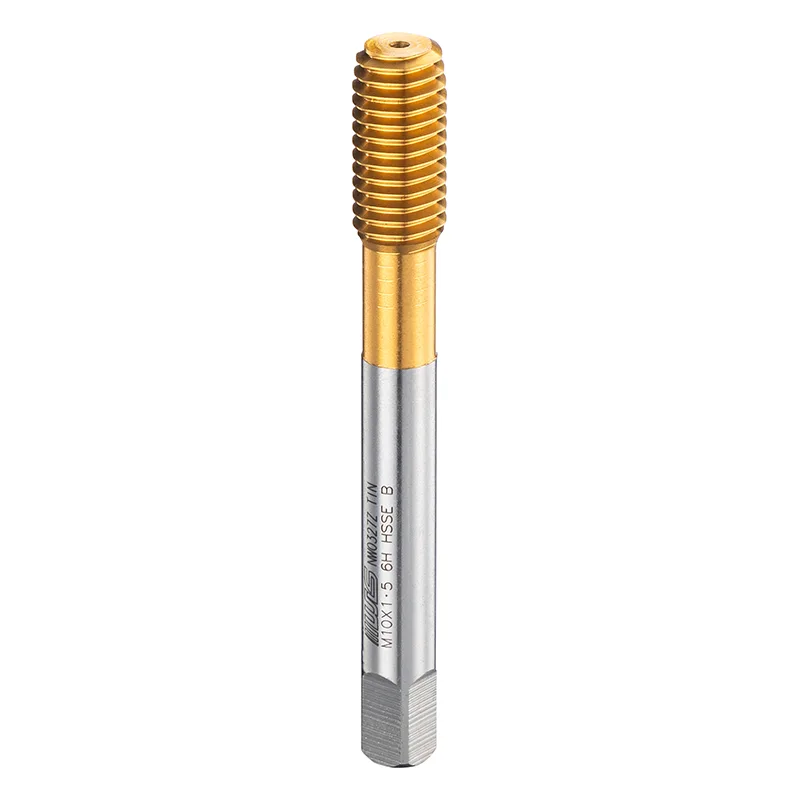
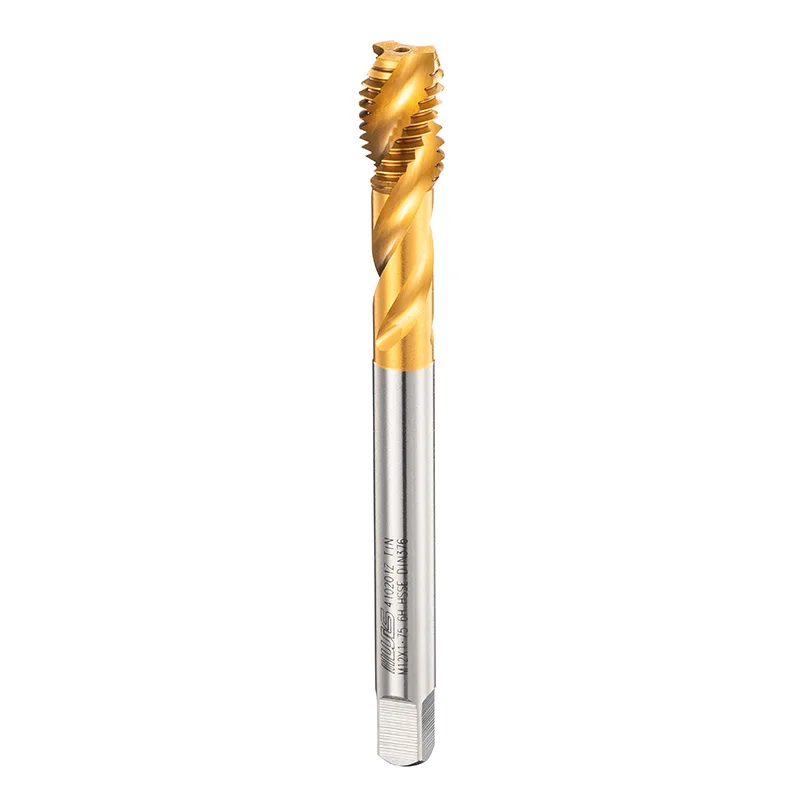
DIN Spiral Flute Taps With Coating are specialized cutting tools designed for producing internal threads in blind holes. The DIN standard ensures dimensional consistency and compatibility across industrial machining systems. Unlike straight flute taps, spiral flute taps feature helical grooves that pull chips upward and out of the hole during tapping operations.
The addition of protective coatings significantly enhances tool performance. These coatings minimize friction, improve heat resistance, and protect the cutting edges from premature wear.
Main Characteristics:
- Designed primarily for blind hole threading
- Efficient chip evacuation
- Improved cutting stability
- High dimensional accuracy
- Suitable for CNC and high-speed machining
- Enhanced durability through advanced coatings
Manufacturers often use these taps in automotive, aerospace, electronics, mold-making, and heavy machinery production because thread quality is critical in these industries.
2. Why Are Coated Spiral Flute Taps Important?
Threading operations can generate significant heat and friction, especially when machining stainless steel, titanium alloys, or hardened materials. Without coatings, taps wear rapidly, causing poor thread quality and unexpected tool breakage.
Coatings act as a protective barrier between the cutting tool and the workpiece. This allows smoother cutting action and better resistance to abrasion and oxidation.
| Benefit | Description |
|---|---|
| Longer Tool Life | Reduces edge wear during continuous machining |
| Lower Friction | Minimizes cutting resistance and heat buildup |
| Improved Surface Finish | Produces cleaner and smoother threads |
| Higher Productivity | Supports faster cutting speeds |
| Reduced Tool Breakage | Improves operational stability |
For manufacturers focused on productivity and precision, coated taps provide a strong competitive advantage.
3. How Does Spiral Flute Geometry Improve Threading?
Chip evacuation is one of the biggest challenges in blind hole tapping. When chips accumulate inside the hole, they can jam the tap, damage the thread profile, or break the tool entirely.
The spiral flute design solves this problem by lifting chips upward and away from the cutting zone. This creates smoother cutting conditions and reduces stress on the tool.
Advantages of Spiral Flute Geometry:
- Efficient chip removal from blind holes
- Reduced cutting torque
- Better lubrication flow
- Improved thread consistency
- Lower risk of chip clogging
Different spiral angles are selected depending on the material being machined. High spiral angles are typically used for softer materials with long chips, while lower spiral angles work better for harder materials.
4. Which Coatings Are Commonly Used?
Various coating technologies are available to optimize performance for specific machining conditions.
| Coating Type | Main Features | Best Applications |
|---|---|---|
| TiN (Titanium Nitride) | General wear resistance and low friction | Carbon steel and alloy steel |
| TiCN | Higher hardness and abrasion resistance | Harder materials |
| TiAlN | Excellent heat resistance | High-speed machining |
| AlCrN | Outstanding oxidation resistance | Dry machining |
| DLC Coating | Extremely low friction | Aluminum and non-ferrous metals |
Choosing the correct coating is essential because each material generates different cutting conditions. An unsuitable coating can lead to excessive wear or unstable cutting.
5. What Materials Can Be Machined?
DIN Spiral Flute Taps With Coating are versatile tools suitable for many industrial materials.
- Carbon steel
- Alloy steel
- Stainless steel
- Cast iron
- Aluminum alloys
- Copper alloys
- Titanium alloys
- Hardened materials
Each material presents unique challenges. For example, stainless steel generates high heat and work hardening, while aluminum tends to produce sticky chips.
Important Considerations:
- Select proper coating according to material hardness
- Use correct lubrication during tapping
- Adjust spindle speed appropriately
- Ensure stable machine rigidity
Correct tool selection dramatically improves thread quality and machining efficiency.
6. How Do Coated Taps Reduce Production Costs?
Although coated taps may have a higher initial purchase price, they often reduce total machining costs significantly over time.
Longer tool life means fewer tool changes, reduced downtime, and more stable production cycles. Improved cutting efficiency also lowers rejection rates caused by defective threads.
| Cost Factor | Without Coating | With Coating |
|---|---|---|
| Tool Life | Shorter | Longer |
| Machine Downtime | Frequent | Reduced |
| Thread Defects | Higher Risk | Lower Risk |
| Production Speed | Limited | Higher Efficiency |
| Total Operating Cost | Higher | Lower |
In high-volume manufacturing, these savings become substantial over long production cycles.
7. What Are the Main Industrial Applications?
Precision threading tools are essential in industries where mechanical reliability is critical.
Key Industries Using DIN Spiral Flute Taps With Coating:
- Automotive manufacturing
- Aerospace engineering
- Medical device production
- Electronics manufacturing
- Mold and die industries
- Hydraulic equipment production
- Construction machinery manufacturing
For example, aerospace components often require precise internal threads with extremely tight tolerances. Coated spiral flute taps help maintain dimensional consistency even in difficult alloys.
8. How to Choose the Right DIN Spiral Flute Tap?
Choosing the correct tap depends on several important factors.
| Selection Factor | Recommendation |
|---|---|
| Workpiece Material | Select coating and substrate accordingly |
| Hole Type | Use spiral flute taps for blind holes |
| Machine Type | Ensure compatibility with CNC or manual systems |
| Cutting Speed | Match with coating performance |
| Lubrication Method | Use coolant or dry machining when appropriate |
A poor tool selection can lead to thread damage, unstable cutting, and increased production costs.
Professional manufacturers such as Taizhou Hongyi Precision Tools Co.,Ltd. provide customized threading solutions based on material type, machining conditions, and production requirements.
9. Common Threading Problems and Solutions
Many threading failures originate from incorrect tool usage or poor machining conditions.
| Problem | Possible Cause | Solution |
|---|---|---|
| Tap Breakage | Chip accumulation | Use correct spiral flute geometry |
| Poor Thread Finish | Worn cutting edges | Replace or recoat the tap |
| Oversized Threads | Machine vibration | Improve machine rigidity |
| Rapid Wear | Incorrect coating selection | Match coating to material |
| High Torque | Insufficient lubrication | Use appropriate coolant |
Regular inspection and process optimization help prevent these issues before they affect production quality.
10. Maintenance and Storage Tips
Proper maintenance extends the lifespan of threading tools and maintains consistent cutting performance.
- Store taps in dry environments
- Protect cutting edges from impact damage
- Clean chips and coolant residues after use
- Inspect wear regularly under magnification
- Use proper tool holders for stability
- Avoid excessive cutting speeds
Even high-quality coated taps can fail prematurely if they are improperly handled or stored.
11. Future Trends in Precision Threading Tools
Modern manufacturing continues to demand higher precision, faster production, and improved sustainability.
As a result, threading tool technologies are evolving rapidly.
Emerging Trends:
- Advanced nano-coating technologies
- AI-assisted machining optimization
- High-speed dry tapping solutions
- Improved carbide substrates
- Smart monitoring systems for tool wear
- Eco-friendly cutting solutions
Manufacturers investing in advanced threading solutions are better positioned to achieve long-term production efficiency and product quality.
12. FAQ
Q1: Why are spiral flute taps better for blind holes?
Spiral flute taps efficiently pull chips upward out of the hole, preventing chip blockage and reducing the risk of tap breakage.
Q2: What is the main advantage of coated taps?
Coatings reduce friction, improve wear resistance, and extend tool lifespan, especially in high-speed or difficult material machining.
Q3: Can coated spiral flute taps machine stainless steel?
Yes. With the correct coating and cutting parameters, these taps perform very well in stainless steel applications.
Q4: How often should taps be replaced?
Replacement frequency depends on material type, cutting conditions, lubrication, and production volume. Regular inspection is recommended.
Q5: Which coating is best for high-temperature machining?
TiAlN coatings are commonly preferred for high-temperature and high-speed machining because of their excellent heat resistance.
Q6: How can manufacturers improve thread quality?
Using the correct tap geometry, coating, lubrication, and machine setup significantly improves thread precision and consistency.
Looking for Reliable Precision Threading Solutions?
Taizhou Hongyi Precision Tools Co.,Ltd. specializes in high-performance DIN Spiral Flute Taps With Coating designed for demanding industrial applications. Whether you need threading solutions for stainless steel, alloy materials, or high-speed CNC machining, our professional team can help you achieve stable quality and higher productivity.
Contact us today to discuss your machining requirements and discover the ideal threading solution for your production line.
Related News
- DIN Spiral Flute Taps With No Coating and the Shift Toward Flexible Machining
- Why DIN Spiral Flute Taps With No Coating Gain Attention in CNC Machining
- What Makes DIN Spiral Flute Taps With No Coating a Practical Choice for Precision Threading?
- How Did One Machine Shop Reduce Threading Rejects by 60%—After Switching to DIN Straight Flute Taps for Their Blind Hole Operations?
- Why Are DIN Extended Spiral Point Taps Essential for High-Performance Threading?
- Why Are ISO Spiral Flute Taps With Coating Essential for High-Precision Threading?
Leave me a message